 Skip to content
Introduction
How to Write Emails That Actually Get Opened and Proven Subject Line Formulas. You can spend hours crafting the perfect email—polishing every sentence, refining your offer, even tweaking the design until it looks just right. But none of that matters if your email never gets opened. That’s the uncomfortable truth about email marketing: your subject line carries the entire weight of that first impression. It’s the gatekeeper. If it fails, everything else gets ignored.
Think about your own inbox for a second. Every day, you’re bombarded with dozens—maybe hundreds—of emails. You don’t carefully analyze each one. You scan, you skim, and within seconds, you decide what’s worth your attention. That quick decision is exactly what your audience is doing too. And more often than not, it all comes down to a single line of text.
In 2026, this challenge has only intensified. With smarter filters, more competition, and shorter attention spans, writing subject lines that actually get opened isn’t just a nice skill to have—it’s essential. The good news? It’s not about being a genius copywriter or coming up with something wildly creative every time. There are proven subject line formulas rooted in psychology and real-world data that consistently drive higher open rates.
What makes this even more interesting is how small tweaks can lead to big results. Changing just a few words can mean the difference between an email that gets ignored and one that gets clicked. It’s a subtle shift, but a powerful one.
In this guide, you’re going to learn exactly how to write emails that don’t just sit in inboxes—they get opened. From understanding what drives human behavior to using tested formulas that work across industries, everything here is designed to help you turn curiosity into clicks.
Because at the end of the day, getting your email opened isn’t about luck—it’s about knowing what makes people care enough to click.
Why Email Open Rates Matter More Than You Think
If your emails aren’t getting opened, nothing else really matters. You could have the most persuasive copy, the best offer, or a beautifully designed layout—but if the subject line doesn’t do its job, your email is basically invisible. That’s the harsh reality of email marketing. The inbox is crowded, attention spans are short, and people make split-second decisions about whether your email is worth their time.
Open rates are often treated like just another metric, but they’re actually the gateway to everything else. No opens mean no clicks, no conversions, and ultimately, no results. It’s like hosting an event where nobody shows up—it doesn’t matter how good the experience would have been.
What makes this even more interesting is how small changes can lead to big differences. A single tweak in your subject line—just a few words—can dramatically increase your open rate. That’s why learning how to write effective subject lines isn’t just helpful, it’s essential.
Another layer to this is competition. Your email isn’t just competing with other marketers—it’s competing with friends, coworkers, and notifications from apps. That means your subject line needs to stand out in a very human way. It has to feel relevant, timely, and worth opening.
For beginners, this can feel overwhelming at first. But once you understand what drives people to click, it becomes much easier. It’s not about being clever for the sake of it—it’s about being intentional with every word you use.
The Psychology Behind Opening an Email
At its core, opening an email is a psychological decision. People don’t analyze subject lines logically—they react to them emotionally and instinctively. Within a second or two, they decide whether to open, ignore, or delete. That decision is driven by a mix of curiosity, relevance, and perceived value.
One of the strongest psychological triggers is curiosity. Humans naturally want to fill gaps in information. When a subject line hints at something interesting but doesn’t reveal everything, it creates a mental itch that people feel compelled to scratch. That’s why lines like “You’re making this mistake…” tend to perform so well—they leave just enough unsaid.
Another powerful factor is self-interest. People are constantly asking themselves, “What’s in it for me?” If your subject line clearly communicates a benefit or solves a problem, it immediately becomes more appealing. For example, “Save 3 hours a day with this simple trick” speaks directly to a common pain point.
There’s also the element of familiarity and trust. If someone recognizes your name and associates it with value, they’re more likely to open your emails. That’s why consistency matters—not just in frequency, but in the quality of what you send.
Emotions play a big role too. Excitement, fear of missing out, relief, and even surprise can all influence open rates. The key is to tap into these emotions without sounding manipulative or spammy.
Understanding these psychological triggers gives you a huge advantage. Instead of guessing what might work, you’re crafting subject lines based on how people actually think and behave.
How Subject Lines Impact Campaign Success
Subject lines don’t just influence open rates—they shape the entire outcome of your email campaign. Think of them as the first domino. If they fall in the right direction, everything else follows. If they don’t, the chain reaction never even starts.
A strong subject line sets expectations. It tells the reader what kind of value they’re about to receive. If your subject line promises something useful or interesting, your email has a better chance of being read all the way through. But if it’s vague or misleading, people may open it—and then quickly lose interest.
There’s also a direct connection between subject lines and engagement metrics. Higher open rates often lead to higher click-through rates, simply because more people are seeing your content. It’s a numbers game, but one that starts with the subject line.
Another important aspect is deliverability. Email providers pay attention to how users interact with your emails. If people consistently ignore or delete them, your future emails are more likely to end up in spam. On the flip side, strong engagement signals that your emails are valuable, improving your chances of landing in the inbox.
For beginners, this is a crucial insight. Improving your subject lines isn’t just about getting more opens—it’s about improving the overall health and effectiveness of your email marketing.
What Makes a Subject Line Irresistible
Writing a subject line that actually gets opened isn’t about luck—it’s about understanding a few key principles and applying them consistently. When you look at high-performing emails, you start to notice patterns. They’re not random. They’re intentional, structured, and designed to trigger specific reactions.
How to Write Emails That Actually Get Opened and Proven Subject Line Formulas.
One of the biggest misconceptions is that subject lines need to be clever or creative. While creativity can help, clarity almost always wins. If people don’t immediately understand what your email is about, they’re less likely to open it. That doesn’t mean you should be boring—it means you should be clear first, then intriguing.
Length also plays a role. Shorter subject lines tend to perform better, especially on mobile devices where space is limited. But shorter doesn’t mean vague. You need to pack meaning into fewer words, which takes practice.
Timing and relevance are equally important. A great subject line sent at the wrong time can still underperform. On the other hand, a relevant message that aligns with what your audience is thinking or experiencing can significantly boost opens.
Another often overlooked factor is authenticity. People can sense when something feels overly promotional or spammy. Subject lines that sound natural and conversational tend to perform better because they feel more human.
Ultimately, an irresistible subject line is one that feels relevant, clear, and intriguing—all at the same time.
Curiosity vs Clarity: Finding the Balance
If there’s one tightrope every email marketer has to walk, it’s the balance between curiosity and clarity. Lean too far into curiosity, and your subject line starts to feel like clickbait. Go too heavy on clarity, and suddenly your email sounds dull—like just another notification people can ignore. The sweet spot sits right in the middle, and finding it is what separates average open rates from exceptional ones.
Curiosity works because it creates an information gap. When people feel like they’re missing a piece of the puzzle, their brain nudges them to fill that gap. That’s why subject lines like “This small mistake is costing you sales” perform so well—they hint at something important without revealing everything. But here’s the catch: if you overdo it and make your subject line too vague, people won’t feel intrigued—they’ll feel confused. And confusion rarely leads to clicks.
Clarity, on the other hand, builds trust. It tells the reader exactly what they’re getting. A subject line like “5 Proven Ways to Increase Your Email Open Rates” is clear, direct, and valuable. There’s no guessing involved. The downside? It may not always spark enough curiosity to stand out in a crowded inbox.
So how do you combine both? Think of clarity as the foundation and curiosity as the hook. Start with a clear benefit or topic, then add a twist that makes people want to know more. For example, instead of saying “Improve Your Email Marketing,” you could say, “Why Most Email Campaigns Fail (And How to Fix Yours).” It’s clear, but it also creates intrigue.
Another way to strike this balance is by being specific without revealing everything. Numbers, timeframes, and outcomes add clarity, while leaving out the “how” creates curiosity. It’s like showing someone the trailer of a movie—you give them enough to be interested, but not enough to satisfy them.
When you get this balance right, your subject lines stop feeling like marketing—and start feeling like invitations.
The Role of Emotion in Email Opens
Logic might justify a decision, but emotion drives it—and email opens are no exception. When someone scans their inbox, they’re not carefully analyzing each subject line. They’re reacting. Something catches their attention, triggers a feeling, and they click. That emotional spark is what you’re aiming for.
Different emotions can drive different types of engagement. Curiosity is one of the most powerful, but it’s not the only one. Urgency creates a fear of missing out, pushing people to act quickly. Excitement builds anticipation, making your email feel like something worth opening. Even relief can be effective, especially if your subject line promises a solution to a frustrating problem.
For example, compare these two subject lines:
- “Email Marketing Tips”
- “Struggling with Email Opens? Try This Simple Fix”
The second one works better because it taps into frustration and offers relief. It speaks directly to a problem the reader might be experiencing.
There’s also something to be said for authenticity in emotion. Overly exaggerated subject lines—like “This Will Change Your Life Forever!!!”—can feel manipulative and reduce trust. Modern audiences are more skeptical, and they’ve seen every trick in the book. Subtle, genuine emotion tends to perform better because it feels real.
Another effective approach is storytelling, even in a subject line. Phrases like “What I learned after sending 1,000 emails” create a sense of curiosity and relatability at the same time. It feels personal, not promotional.
Emotion isn’t about being dramatic—it’s about being human. When your subject lines reflect real experiences, challenges, or desires, they resonate on a deeper level. And that resonance is what turns a quick glance into a click.
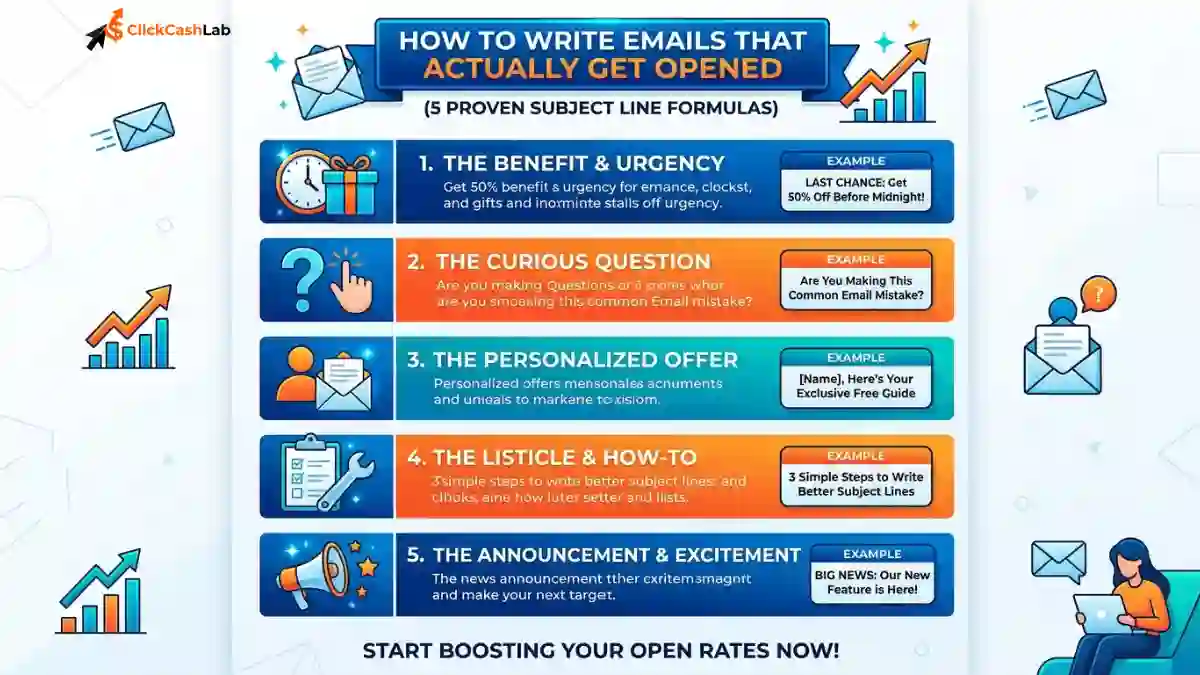
Proven Subject Line Formulas That Work
Once you understand the psychology behind email opens, the next step is applying it in a structured way. That’s where subject line formulas come in. Think of them as frameworks—not rigid templates, but starting points you can adapt to your own voice and audience.
The reason formulas work is simple: they’re based on patterns that have been tested repeatedly. Instead of reinventing the wheel every time you write an email, you can lean on these proven structures to guide your thinking. It’s like having a shortcut without sacrificing quality.
That said, formulas aren’t magic. They still require context, creativity, and a clear understanding of your audience. A formula that works for an eCommerce brand might not work for a personal blog. The key is to use these frameworks as a foundation, then tailor them to your specific situation.
Below are some of the most effective subject line formulas, along with insights on how and when to use them.
The Curiosity Gap Formula
The curiosity gap formula is all about creating intrigue without giving everything away. It works by hinting at something valuable or surprising while leaving out key details. This gap between what the reader knows and what they want to know is what drives the click.
Examples include:
- “You’re probably doing this wrong…”
- “This one change doubled my open rates”
- “Nobody talks about this email trick”
What makes this formula so effective is its simplicity. You don’t need complex wording or clever phrasing—just a clear idea and a hint of mystery. But it’s important to use it responsibly. If your email doesn’t deliver on the promise, you risk losing trust.
The best way to use this formula is when you have genuinely interesting or unexpected insights to share. It works particularly well for educational content, case studies, and personal experiences.
The Personalization Formula
Personalization goes beyond just adding someone’s name to the subject line. It’s about making the email feel relevant to the individual. When done right, it creates the impression that the message was written specifically for them.
Examples include:
- “John, quick question about your marketing strategy”
- “A tip for your online store”
- “Ideas tailored for your business”
What makes personalization powerful is its ability to cut through noise. In a crowded inbox, anything that feels tailored stands out. But there’s a fine line—over-personalization can feel intrusive if it’s not done thoughtfully.
Behavior-based personalization is especially effective. For example, referencing something a user did—like signing up for a webinar or downloading a guide—makes the email feel timely and relevant.
The Urgency & Scarcity Formula
Urgency taps into the fear of missing out, pushing people to act quickly. Scarcity reinforces this by suggesting limited availability. Together, they create a sense of immediacy that can significantly boost open rates.
Examples include:
- “Last chance to grab this deal”
- “Only a few spots left”
- “Ends tonight: Don’t miss out”
This formula works best for promotions, launches, and time-sensitive content. But it needs to be used carefully. False urgency can damage credibility, especially if it’s overused.
The Benefit-Driven Formula
This is one of the most straightforward and effective approaches. It focuses on clearly communicating the value the reader will get from opening the email.
Examples include:
- “Boost your open rates in 24 hours”
- “Save time with this simple workflow”
- “Grow your list faster with these tips”
The strength of this formula lies in its clarity. There’s no guessing involved—the reader knows exactly what they’re getting. It works well for tutorials, guides, and actionable content.
The Question-Based Formula
Questions naturally engage the brain. When someone reads a question, they instinctively start thinking about the answer. This makes question-based subject lines highly effective.
Examples include:
- “Are your emails being ignored?”
- “Want more clicks from your campaigns?”
- “Is this hurting your open rates?”
The key is to ask questions that resonate with your audience’s experiences or challenges. Generic questions won’t have the same impact as specific, relatable ones.
Power Words That Boost Open Rates
Sometimes, it’s not the structure of your subject line that makes the biggest difference—it’s the specific words you choose. Certain words have a psychological impact that naturally grabs attention, sparks curiosity, or triggers emotion. These are often called power words, and when used strategically, they can significantly improve your open rates without completely rewriting your subject line.
Think of power words as amplifiers. They don’t replace a good subject line—they enhance it. For example, compare “Email Tips You Should Know” with “Essential Email Tips You Can’t Afford to Miss.” The second one feels more urgent and valuable, even though the core idea is the same.
Some of the most effective categories of power words include:
- Curiosity-driven words: secret, hidden, unknown, surprising
- Urgency-based words: now, today, last chance, limited
- Emotional words: effortless, proven, powerful, simple
- Exclusivity words: exclusive, members-only, private
But here’s where many beginners go wrong—they overuse them. Stuffing your subject line with too many power words can make it feel spammy or exaggerated. Modern inbox filters and users are both smart enough to recognize that.
The key is subtlety. Use one or two strong words to enhance your message, not overwhelm it. For instance, “A Simple Trick to Improve Your Emails” feels natural and appealing, while “The Ultimate Secret Trick You Must Try Now!!!” feels forced.
Another important point is alignment. Your subject line should match the tone and content of your email. If your subject line promises something “shocking” but your email is fairly standard, it creates a disconnect that can hurt trust over time.
Power words work best when they feel organic—like something you’d actually say in a conversation. When used correctly, they can turn an average subject line into one that’s hard to ignore.
Mistakes That Kill Your Open Rates
Even with the best intentions, it’s easy to fall into habits that quietly sabotage your email performance. These mistakes aren’t always obvious, but they can have a significant impact on whether your emails get opened or ignored.
One of the biggest offenders is being too vague. Subject lines like “Newsletter #12” or “Update” don’t give the reader any reason to care. They lack context, value, and curiosity. If someone has to guess what your email is about, they’ll usually choose not to open it.
Another common mistake is trying too hard to sound professional. Overly formal language can make your emails feel cold and impersonal. People don’t open emails because they sound polished—they open them because they feel relevant and human.
Then there’s the issue of clickbait. While curiosity is powerful, misleading subject lines can backfire quickly. If readers feel tricked, they’re less likely to trust your future emails. Open rates might spike temporarily, but long-term engagement suffers.
Overuse of capitalization and punctuation is another red flag. Subject lines like “DON’T MISS THIS!!!” can trigger spam filters and turn off readers. It feels aggressive rather than inviting.
Timing and frequency also play a role. Sending too many emails can lead to fatigue, while sending too few can make people forget about you. Finding the right balance takes experimentation, but ignoring it altogether can hurt your results.
Finally, ignoring mobile optimization is a subtle but costly mistake. A large percentage of emails are opened on mobile devices, where subject lines get cut off. If your most important words are at the end, they might never be seen.
Avoiding these mistakes doesn’t require advanced skills—just awareness and a bit of intentionality.
A/B Testing Your Subject Lines Like a Pro
If you want to consistently improve your open rates, guessing isn’t enough. What works for one audience might not work for another, and even small differences can lead to big changes in performance. That’s where A/B testing comes in.
At its core, A/B testing is simple. You create two versions of a subject line, send them to different segments of your audience, and see which one performs better. The winning version is then sent to the rest of your list. It’s a practical, data-driven way to refine your approach over time.
What makes A/B testing so powerful is that it removes assumptions. Instead of relying on what you think will work, you’re relying on actual user behavior. Over time, these insights compound, helping you understand your audience on a deeper level.
But here’s the catch—effective testing requires focus. Testing too many variables at once can make your results unclear. The goal is to isolate one element at a time so you can understand what’s actually driving the difference.
What to Test and Why
When it comes to subject lines, there are several elements you can test, each offering different insights into your audience’s preferences.
Start with length. Short subject lines can feel punchy and direct, while longer ones can provide more context. Testing both can reveal what your audience responds to.
Next is tone. Try comparing a casual, conversational subject line with a more formal one. You might find that your audience prefers one style over the other.
You can also test curiosity vs clarity. For example, compare a curiosity-driven subject line with a benefit-driven one. This helps you understand whether your audience prefers intrigue or direct value.
Another variable is personalization. Adding a name or referencing user behavior can increase relevance, but it doesn’t always guarantee better results. Testing helps you find out what works in your specific case.
Even small changes—like swapping a single word—can have a noticeable impact. The key is to stay consistent and keep testing over time.
Tools That Make Testing Easy
The good news is that most modern email marketing platforms make A/B testing incredibly easy. Tools like Mailchimp, Brevo, and MailerLite allow you to set up tests with just a few clicks.
These platforms handle the heavy lifting—splitting your audience, tracking performance, and determining the winner. All you need to do is interpret the results and apply what you learn.
Some tools even offer AI-powered suggestions, helping you generate subject lines based on past performance. While these can be helpful, they shouldn’t replace your own understanding of your audience.
The real value comes from combining tools with insight. Use the data to guide your decisions, but always keep your audience’s needs and preferences at the center.
Real Examples of High-Performing Subject Lines
Sometimes, the best way to understand what works is to see it in action. High-performing subject lines often follow the same principles we’ve discussed—but each one has its own twist.
Here are a few examples and why they work:
- “I tested 10 subject lines—this one won”
This combines curiosity with specificity. It hints at a result without revealing everything. - “Your emails deserve more opens (here’s how)”
Clear benefit with a subtle curiosity hook. - “Quick question about your last campaign”
Feels personal and conversational, increasing the likelihood of being opened. - “This mistake is costing you subscribers”
Taps into fear and curiosity at the same time. - “3 simple tweaks that doubled my open rates”
Specific, benefit-driven, and easy to digest.
What these examples have in common is that they feel natural. They don’t try too hard, and they don’t rely on gimmicks. Instead, they focus on relevance, clarity, and a touch of intrigue.
Use these as inspiration, not templates. Adapt them to your voice, your audience, and your goals.
Conclusion
Get Opened and Proven Subject Line Formulas. Writing emails that actually get opened isn’t about luck or guesswork—it’s about understanding how people think and making intentional choices with your subject lines—every word matters. Every phrase plays a role in whether your email gets noticed or ignored.
The good news is that this is a skill you can develop. By focusing on clarity, tapping into emotion, and using proven formulas, you can dramatically improve your open rates over time. You don’t need to be a copywriting expert—you just need to be thoughtful and consistent.
It’s also important to remember that improvement comes from iteration. Test different approaches, learn from your results, and keep refining your strategy. What works today might not work tomorrow, and that’s part of the process.
At the end of the day, your goal isn’t just to get opens—it’s to build a connection with your audience. When your emails feel relevant, valuable, and human, people won’t just open them—they’ll look forward to them.
FAQs
1. What is a good email open rate in 2026?
A good open rate typically ranges between 20% and 30%, though this can vary depending on your industry and audience.
2. How long should a subject line be?
Ideally, keep it between 6–10 words or under 50 characters to ensure it displays well on mobile devices.
3. Do emojis in subject lines increase open rates?
Sometimes. Emojis can help your email stand out, but they should be used sparingly and only when relevant.
4. How often should I test subject lines?
You should A/B test regularly—especially when sending important campaigns—to continuously improve your performance.
5. Can personalization really improve open rates?
Yes, when done correctly. Personalized subject lines can increase relevance and engagement, but they should feel natural, not forced.
How-to-Build an Email List in 2026 From Scratch Without Paid Ads
