 Skip to content
Introduction to Cold Email Marketing
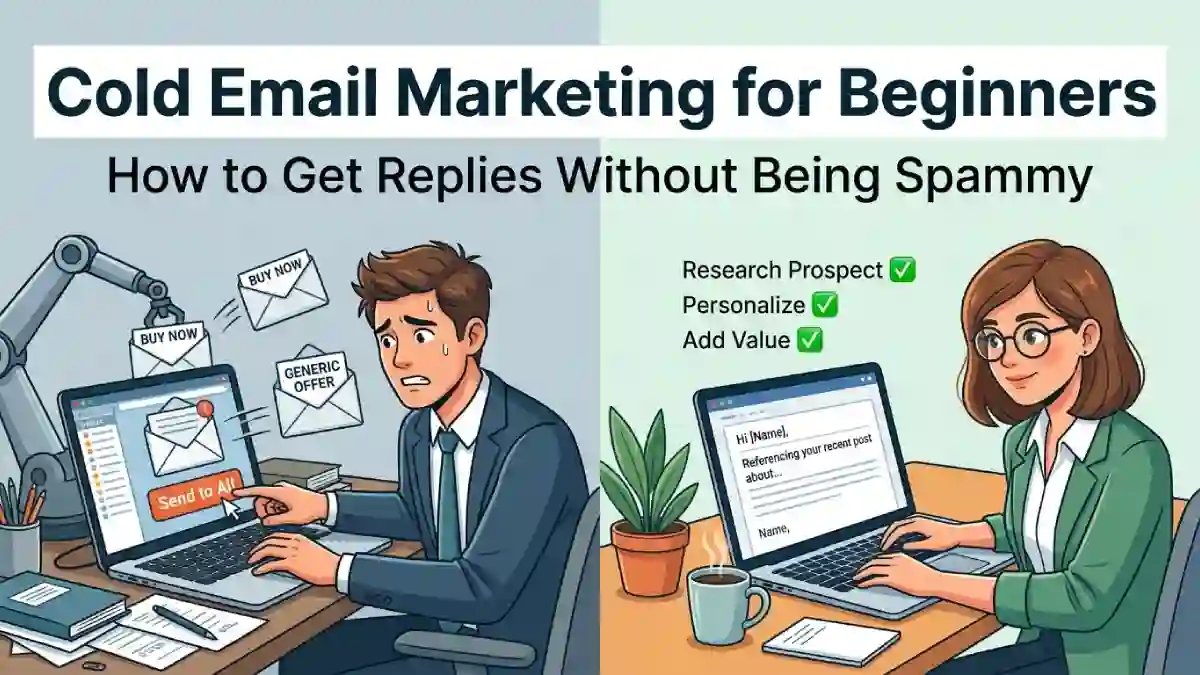
Cold Email Marketing for Beginners: How to Get Replies Without Being Spammy. Email marketing is one of those strategies that sounds intimidating at first, mostly because people associate it with spam or aggressive sales messages. But when done correctly, it’s actually one of the most precise and profitable ways to reach potential clients, customers, or partners directly. Instead of waiting for people to find you, cold email allows you to proactively start conversations with individuals who are already aligned with your offer or niche. That shift—from passive waiting to intentional outreach—is what makes it so powerful.
At its core, cold email is not about selling immediately. It’s about starting a conversation. Many beginners fail because they treat it like advertising, blasting generic messages to thousands of random contacts. That approach doesn’t work anymore, and worse, it damages reputation and deliverability. Modern cold email marketing is built around relevance, personalization, and value-driven communication. You’re essentially saying, “I noticed something relevant about you, and I think I can help,” rather than “Buy my product right now.”
Another reason cold email is still effective today is because of how crowded digital platforms have become. Social media algorithms limit visibility, paid ads are expensive, and SEO takes time. Cold email bypasses all of that by putting your message directly in someone’s inbox. When done ethically, it becomes a highly targeted outreach method rather than a spam tactic.
The goal of this guide is to break down exactly how beginners can use cold email without being spammy. You’ll learn how to build lists, write messages that get replies, avoid spam filters, and structure conversations that lead to real opportunities. Think of it as learning how to knock on the right doors with the right message at the right time—without being ignored or blocked.
By the end, you’ll understand that cold email isn’t about volume; it’s about precision. One well-written email sent to the right person is worth more than a thousand generic blasts. That mindset alone separates successful cold email marketers from those who struggle.
What Is Cold Email Marketing?
How to Get Replies Without Being Spammy, Cold Email Marketing for Beginners is the practice of sending direct email messages to people who have not previously interacted with you, your brand, or your business. Unlike warm email marketing—where subscribers already opted in—cold email starts from zero familiarity. That’s why the quality of your message, targeting, and intent matters so much. You’re entering someone’s personal or professional inbox without prior permission, so your approach must immediately establish relevance and trust.
At a technical level, cold email is often used in B2B sales, freelancing outreach, SaaS marketing, recruitment, and partnership building. However, it is not limited to businesses. Even individuals looking to grow personal brands, secure clients, or promote services can use cold email effectively. The key distinction is that you are initiating contact rather than responding to inbound interest.
One important misconception is that cold email equals spam. That is not true. Spam is mass, irrelevant, and often deceptive messaging sent without regard for the recipient. Cold email, when done properly, is targeted, researched, and personalized communication intended to provide value or solve a problem. The difference lies in intent and execution. A well-researched email sent to a relevant decision-maker is not spam—it’s outreach.
Another defining feature of cold email marketing is scalability. With the right tools and systems, you can reach hundreds or thousands of potential leads efficiently. However, scalability should never come at the expense of personalization. The most successful cold email campaigns balance both—using automation for delivery while maintaining human-like messaging.
Cold email also works because it shortens the sales cycle. Instead of waiting for leads to come through ads or content, you proactively engage decision-makers directly. This directness can lead to faster responses, quicker deals, and more predictable outcomes when managed correctly.
Ultimately, cold email marketing is about strategic communication. It combines research, psychology, writing skills, and timing into a system that creates opportunities where none previously existed. When mastered, it becomes one of the most powerful outreach tools in digital marketing.
Why Cold Email Marketing Still Works Today
Despite the rise of social media, automation tools, and AI-driven advertising platforms, cold email marketing continues to deliver strong results in 2026. The reason is simple: email is still one of the most personal and direct communication channels available. People may ignore ads, scroll past social posts, or block pop-ups, but email remains a space where professional communication still happens daily.
One of the biggest strengths of cold email is intent neutrality. Unlike ads, which can feel intrusive, or social media posts, which compete for attention in crowded feeds, email arrives in a context where users already expect messages from unknown senders. This creates an opportunity for thoughtful outreach to stand out, provided it is relevant and well-written.
Another reason cold email still works is the precision of targeting. Modern tools allow marketers to identify specific job titles, industries, company sizes, or even behavioral signals. This means your message can be highly relevant from the start. When someone receives an email that speaks directly to their role or problem, the likelihood of engagement increases significantly.
Cold email also benefits from low competition in many niches. While social media is saturated with content creators and advertisers, many inboxes—especially in B2B environments—are still underutilized for high-quality outreach. This creates an opportunity for those who take the time to research and personalize their communication.
Psychologically, email feels more intentional than other forms of outreach. A well-crafted email suggests effort, research, and seriousness. This perception alone increases credibility, especially when compared to generic ads or mass messaging on social platforms. People are more likely to respond when they feel personally addressed rather than broadly targeted.
Finally, cold email works because it is measurable. Open rates, reply rates, and conversion rates provide clear feedback loops. This allows continuous optimization, making campaigns more effective over time. Unlike some marketing channels where performance is vague, cold email offers direct insight into what is working and what is not.
When used ethically and strategically, cold email remains one of the most efficient ways to generate leads, build relationships, and create business opportunities in any industry.
Essential Tools You Need to Get Started
Starting cold email marketing does not require a complicated tech stack, but using the right tools can dramatically improve your efficiency, deliverability, and results. At the most basic level, you need tools for prospecting, sending emails, and tracking performance. Each of these plays a critical role in ensuring your outreach feels professional rather than spammy.
The first essential tool is an email sending platform, often called a cold email outreach tool. Platforms like Instantly, Lemlist, Mailshake, or Smartlead allow you to send personalized emails at scale while managing deliverability settings. These tools are designed specifically for cold outreach, meaning they include features like email warm-up, automation sequences, and inbox rotation to reduce spam risks.
Next, you need a prospecting or lead generation tool. This is where you find the people you want to contact. Tools like Apollo.io, Hunter.io, or LinkedIn Sales Navigator help you build highly targeted lists based on job title, industry, company size, or location. Without this step, your cold email campaign becomes random, which significantly reduces reply rates.
A third important component is email verification software. Sending emails to invalid addresses can damage your sender reputation quickly. Tools like NeverBounce or ZeroBounce help clean your list and ensure that your messages actually reach real inboxes.
You will also need a basic CRM or tracking system, even if it’s built into your email platform. This allows you to monitor replies, follow-ups, and conversions. Cold email is not just about sending messages—it’s about managing conversations over time.
Finally, personalization tools or data enrichment platforms can help you add context to your emails. This might include company news, recent LinkedIn activity, or website insights. Even small details like these can significantly increase reply rates because they show genuine effort.
Together, these tools form the foundation of a professional cold email system. You don’t need to buy everything at once, but understanding how each piece fits into the workflow is essential for long-term success.
Building a Targeted Prospect List
A cold email campaign is only as strong as the list behind it. You can write the most persuasive message in the world, but if it lands in the inbox of someone who doesn’t care, it will still get ignored. That’s why list building is not just a preparatory step—it is the foundation of everything in cold email marketing. Without a website, you don’t have inbound traffic to “filter” leads, so your targeting has to be deliberate from the start.
A targeted prospect list begins with defining your ideal customer profile (ICP). This means clearly understanding who you are trying to reach, what industry they belong to, what role they hold, and what problem you solve for them. For example, if you are selling automation services, your ideal prospects might be small business owners, marketing managers, or SaaS founders who are already overwhelmed with repetitive tasks. The more specific your ICP, the easier it becomes to find relevant contacts and craft messages that resonate.
Once your ICP is defined, you move into data sourcing. Platforms like Apollo.io, LinkedIn Sales Navigator, and Crunchbase allow you to filter leads based on very precise criteria such as company size, revenue range, geography, and job title. This level of filtering ensures that your emails are not wasted on irrelevant recipients. Instead of blasting thousands of random contacts, you focus on hundreds of high-quality prospects who are more likely to respond.
Another important aspect of list building is segmentation. Not all prospects are the same, even within the same niche. For instance, a startup founder and a corporate marketing director may both need your service, but they respond to different messaging styles. Segmenting your list allows you to tailor your outreach so that each group receives slightly customized communication that matches their priorities.
Data quality is just as important as targeting. Outdated or incorrect email addresses can harm your sender reputation and reduce deliverability. This is why verification tools like NeverBounce or ZeroBounce are essential. Cleaning your list ensures that your messages actually reach real people, not dead inboxes.
Ultimately, building a targeted prospect list is about precision over volume. A smaller, highly relevant list will always outperform a large, unfocused one. When your outreach feels relevant from the very first line, you dramatically increase your chances of getting replies without ever appearing spammy.
Finding Leads Ethically Without Spam
Ethical lead generation is what separates professional cold email marketers from spammers. The goal is not to collect as many email addresses as possible—it is to identify people who genuinely fit your offer and would benefit from hearing from you. When your leads are gathered responsibly, your emails naturally feel more relevant, and your response rates improve without needing aggressive tactics.
One of the most effective ethical methods is using public business directories and professional platforms like LinkedIn. These platforms exist specifically for professional networking, which means users already expect some level of outreach. By carefully filtering and selecting profiles based on relevance, you can build a list that is both compliant and highly targeted.
Another ethical strategy is leveraging company websites and “contact” or “about” pages. Many businesses openly list decision-makers’ emails for professional inquiries. While scraping should always be done responsibly and within platform guidelines, using publicly available information for legitimate outreach is a widely accepted practice in B2B marketing.
You can also find leads by engaging in online communities such as niche forums, Slack groups, or industry-specific communities. People who actively participate in these spaces are often open to collaboration, partnerships, or services that improve their work. The key here is observation before outreach—understanding their pain points before contacting them.
Content-based lead discovery is another underrated approach. By analyzing who engages with relevant content on platforms like LinkedIn or Twitter, you can identify individuals who already show interest in your niche. These “warm signals” make your outreach more natural because you are responding to existing interest rather than interrupting cold attention.
Ethical lead generation is also about respecting boundaries. Avoid purchasing low-quality email lists or using scraped data without verification. These shortcuts may produce short-term volume but will damage deliverability and reputation in the long run. Cold email works best when built on trust, not shortcuts.
When your lead generation process is ethical, intentional, and aligned with real interest, your cold emails stop feeling like interruptions and start feeling like opportunities.
Crafting High-Converting Subject Lines
Your subject line is the gatekeeper of your cold email. No matter how strong your message is, it will never be read if the recipient doesn’t open the email in the first place. That is why subject lines in cold email marketing are not about being clever—they are about being clear, relevant, and curiosity-driven without feeling manipulative.
The best cold email subject lines are often short and human. Overly promotional language like “BUY NOW” or “LIMITED OFFER” immediately signals spam filters and reduces trust. Instead, effective subject lines mimic natural professional communication. For example, something as simple as “Quick question about your team” or “Idea for [Company Name]” often performs better than flashy marketing phrases because it feels personal and non-intrusive.
Relevance is another key factor. A subject line should hint at something specific about the recipient or their business. This could be their industry, role, or a recent event. When people see something that feels tailored to them, they are more likely to open the email out of curiosity. This is why personalization at the subject line level can significantly increase open rates.
Curiosity also plays a powerful role, but it must be used carefully. The goal is not to trick the reader but to create enough interest that they feel compelled to open the email. Subject lines like “Saw this and thought of you” or “A small suggestion for your workflow” create a sense of unfinished thought that encourages engagement.
Another effective approach is problem-based subject lines. These directly reference a challenge your prospect may be facing. For example, “Struggling with lead generation?” immediately resonates with business owners dealing with that issue. This works because it speaks directly to a pain point rather than pushing a product.
Testing is essential in cold email subject lines. Even small changes in wording can significantly impact open rates. Over time, successful marketers develop a sense of which tones and styles work best for their audience.
A strong subject line does not sell—it earns attention. Once you understand that distinction, your entire cold email strategy becomes more effective and naturally less spammy.
Writing Cold Emails That Get Replies
The core purpose of a cold email is not to sell immediately—it is to start a conversation. Beginners often make the mistake of writing emails that feel like advertisements, which instantly reduces trust and engagement. A high-converting cold email is short, relevant, and focused on the recipient rather than the sender. When written correctly, it feels less like marketing and more like a professional message from someone who has done their homework.
The structure of an effective cold email is simple but powerful. It usually begins with a personalized opening line that shows relevance. This could reference the recipient’s role, company, or a specific challenge they might be facing. This first line is crucial because it determines whether the reader continues or ignores the rest. When someone feels that the message was written specifically for them, they are far more likely to keep reading.
After the opening, the email should quickly transition into context. This is where you briefly explain why you are reaching out. The key here is to avoid unnecessary background information. Instead of telling your entire story, focus on the problem you solve and why it matters to them. Brevity is not just a stylistic choice—it is a respect signal in cold outreach.
The value proposition comes next. This is where you clearly explain how you can help or what benefit the recipient might gain from engaging with you. However, this should be framed lightly, not aggressively. You are not pushing a sale—you are suggesting a potential opportunity or solution.
Finally, the call-to-action should be simple and low-friction. Asking for a meeting, feedback, or a quick response works far better than asking for a commitment or purchase. For example, “Would it make sense to explore this further?” is more effective than “Buy my service today.”
Tone also plays a major role. The best cold emails sound human, not corporate. They avoid jargon, overly formal language, or long-winded explanations. Instead, they feel like a short message someone might send after a thoughtful observation.
When done right, a cold email doesn’t feel like outreach—it feels like relevance. And relevance is what gets replies.
Personalization Strategies That Feel Human
Personalization is what transforms a cold email from generic outreach into meaningful communication. However, true personalization is not just inserting a name or company into a template. That level of surface customization is easily recognized and ignored. Real personalization shows that you understand the recipient’s world, challenges, and priorities.
One of the most effective strategies is contextual personalization. This involves referencing something specific about the recipient’s business, such as a recent product launch, hiring activity, or public statement. These details signal that you have taken time to research them, which immediately increases credibility. Even a single well-placed observation can significantly improve reply rates.
Another approach is role-based personalization. Different job titles care about different outcomes. A CEO may care about revenue growth, while a marketing manager focuses on lead generation efficiency. When your email aligns with their specific priorities, it feels more relevant and less like mass outreach.
Behavioral personalization is also powerful. This involves referencing actions the recipient has taken online, such as engaging with content, posting about a topic, or participating in discussions. These signals indicate interest, making your outreach feel timely rather than random.
However, personalization should always remain natural. Overdoing it can feel intrusive or artificial. The goal is not to demonstrate how much data you collected, but to show genuine understanding of their situation. A single thoughtful sentence often performs better than multiple forced references.
Ultimately, human-feeling personalization is about empathy. It is about stepping into the recipient’s perspective and asking, “What would make this message feel relevant to me right now?” When you answer that well, your cold emails stop feeling cold altogether.
Deliverability & Spam Avoidance
Deliverability is the invisible backbone of every successful cold email campaign. You might have the perfect list and a compelling message, but if your emails land in the spam folder, none of it matters. Avoiding spam filters is not about tricks—it is about building trust with email providers through consistent, natural sending behavior.
One of the most important factors is sender reputation. Email providers like Gmail and Outlook evaluate how recipients interact with your emails. High open rates, replies, and low spam complaints signal that your messages are wanted. On the other hand, low engagement or frequent deletions can damage your reputation over time.
Warming up your email account is another critical step. New email domains or accounts should never start with large-scale sending immediately. Instead, gradual sending patterns help establish credibility. Many cold email tools include automated warm-up features that simulate natural email conversations to build trust with providers.
Content also plays a major role in deliverability. Emails that are overly promotional, contain excessive links, or use spam-trigger words can be flagged automatically. Keeping your messages simple, text-based, and conversational reduces the likelihood of landing in spam.
Another important practice is maintaining list hygiene. Sending emails to invalid or inactive addresses can harm your sender score. Regularly cleaning your list ensures that you are only reaching real, engaged inboxes.
Finally, sending consistency matters. Sudden spikes in volume can trigger spam filters, while steady, predictable sending patterns build trust. Cold email is not about aggressive bursts—it is about sustainable communication.
When deliverability is handled correctly, your cold emails naturally reach inboxes, giving every message a fair chance to generate replies and opportunities.
Follow-Up Sequences That Work
Most replies in cold email marketing do not come from the first message—they come from the follow-ups. This is where beginners often give up too early, assuming silence means rejection. In reality, many prospects are simply busy, distracted, or not ready to respond immediately. A well-structured follow-up sequence ensures that your message stays visible without becoming annoying.
The key to effective follow-ups is timing and tone. The first follow-up usually happens within two to three days after the initial email. It should be short, polite, and reference the original message without repeating it entirely. The goal is simply to reappear in the inbox, not to restart the entire pitch.
Subsequent follow-ups can introduce new angles or slightly different value points. Instead of repeating the same message, you might highlight a different benefit, share a short insight, or ask a simple question. This keeps the conversation fresh and increases the likelihood of engagement.
Persistence is important, but so is restraint. Most effective cold email sequences range from three to five follow-ups. Beyond that, the likelihood of response decreases significantly, and continued messaging may damage reputation. Knowing when to stop is just as important as knowing when to continue.
Tone throughout the sequence should remain respectful and professional. Avoid frustration, pressure, or guilt-inducing language. The purpose of follow-ups is to stay helpful, not to force a response.
When done correctly, follow-up sequences often outperform initial emails in generating replies. They act as gentle reminders that keep opportunities alive without overwhelming the recipient.
Handling Replies and Starting Conversations
Getting a reply is only the beginning of the cold email process. What happens next determines whether that reply turns into an opportunity or disappears without progress. Handling responses effectively requires clarity, speed, and conversational awareness.
The first priority is responding quickly. When someone replies to a cold email, their interest is highest at that moment. Delayed responses can reduce momentum and decrease conversion chances. A timely reply shows professionalism and keeps the conversation active.
Your response should always match the tone of the prospect. If they are formal, remain professional. If they are casual, you can mirror that style. This subtle alignment builds rapport and makes the interaction feel natural rather than transactional.
It is also important to guide the conversation forward gently. Instead of overwhelming the prospect with information, ask simple questions that move things toward clarity. For example, asking about their current challenges or goals helps you understand how to position your offer more effectively.
Avoid immediately pushing for a sale unless the prospect is clearly ready. Cold email conversations often require a gradual buildup of trust before any commitment happens. The goal is to transition from outreach to dialogue.
Strong conversation handling is what turns cold emails into real business relationships. Each reply is an opportunity to deepen trust and move one step closer to a meaningful outcome.
Conclusion
Cold email marketing remains one of the most effective ways to generate leads, build relationships, and create business opportunities without relying on ads or inbound traffic. When done properly, it is not spam—it is structured, intentional communication designed to connect with the right people at the right time. The difference lies in strategy, not just tools or volume.
From building targeted lists to writing human-like messages and managing follow-ups, every step plays a role in shaping your results. Beginners who focus on relevance, personalization, and deliverability consistently outperform those who rely on mass messaging or shortcuts. Cold email rewards patience, precision, and continuous improvement.
FAQs
1. Is cold email marketing legal?
Yes, as long as you follow regulations like CAN-SPAM, GDPR, and include proper opt-out options where required.
2. How many cold emails should I send per day as a beginner?
Start small—around 20 to 50 emails per day—to maintain deliverability and test performance safely.
3. Why do cold emails go to spam?
Common reasons include poor sender reputation, spam-trigger words, lack of warm-up, or sending to unverified lists.
4. How long should a cold email be?
Short and focused emails (50–150 words) tend to perform best because they respect the recipient’s time.
5. How many follow-ups should I send?
Typically 3 to 5 follow-ups are effective, spaced a few days apart, without being pushy.
How to Make Money With Email Marketing Without a Website
7 Automated Email Sequences That Generate Sales While You Sleep
Email Marketing vs Social Media & Which One Makes More Money?
Proven Subject Line Formulas + How to Write Emails That Actually Get Opened
