 Skip to content
Introduction to Essential Marketing Skills
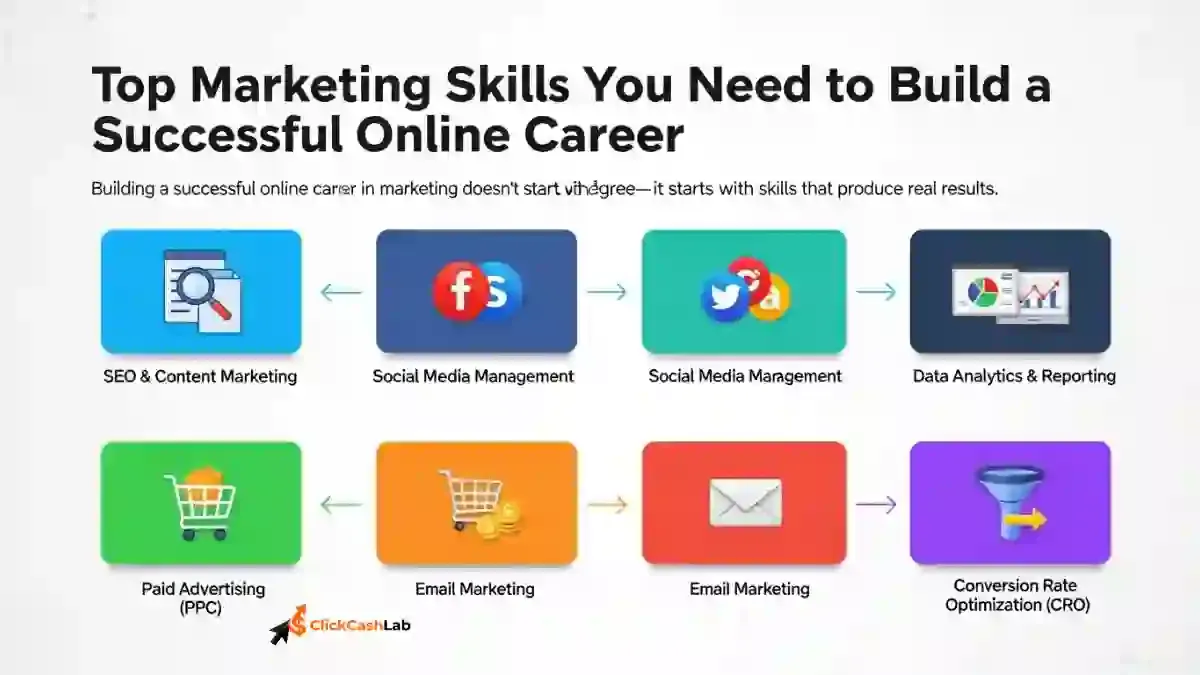
Top Marketing Skills In 2026, building a successful online career in Marketing doesn’t start with a degree—it starts with skills that produce real results. The digital landscape has shifted dramatically over the past decade. Today, businesses are not looking for certificates or theoretical knowledge; they are searching for individuals who can generate traffic, engage audiences, and drive conversions.
What makes marketing such a powerful career choice is its flexibility. You can work remotely, freelance with global clients, build your own brand, or even launch your own business. But all of these opportunities depend on one thing: your ability to execute marketing strategies effectively.
The challenge for beginners is knowing where to focus. Marketing is a broad field that includes content creation, SEO, social media, analytics, advertising, and more. Trying to learn everything at once often leads to confusion and slow progress. That’s why understanding the most important skills first is critical.
Another key factor is the pace of change. Algorithms evolve, platforms rise and fall, and consumer behavior shifts constantly. This means that successful marketers are not just skilled—they are adaptable. They continuously learn, experiment, and refine their approach.
At its core, marketing is about solving problems through communication. If you can understand what people need and present solutions clearly, you already have a strong foundation.
This guide breaks down the top marketing skills you need to build a sustainable and successful online career, starting from the fundamentals and moving toward advanced capabilities.
Why Skills Matter More Than Degrees in 2026

The traditional path of earning a degree and then finding a job is no longer the only route into marketing. In fact, many companies now prioritize practical skills over formal education.
One major reason is the rapid evolution of digital platforms. Universities often struggle to keep up with real-time changes in SEO algorithms, social media trends, and advertising systems. As a result, graduates may have theoretical knowledge but lack hands-on experience.
Employers, on the other hand, are focused on outcomes. They want to see proof—campaigns you’ve run, content you’ve created, or results you’ve achieved. A portfolio often carries more weight than a diploma.
The rise of freelancing has also contributed to this shift. Clients hiring freelancers rarely ask about degrees. Instead, they evaluate your ability to deliver results within a specific timeframe.
Another factor is accessibility. With countless free resources available online, anyone can learn marketing skills without enrolling in expensive programs. This has leveled the playing field, making it possible for self-taught individuals to compete with formally educated professionals.
Ultimately, skills matter more because they are directly tied to performance. In a results-driven industry like marketing, what you can do will always outweigh what you studied.
The Evolution of Online Marketing Careers
Online marketing careers have evolved from simple roles into highly specialized and dynamic professions. In the early days of digital marketing, generalists handled everything—content, SEO, ads, and analytics. Today, the field is much more diverse.
There are now specialists in areas like SEO strategy, social media growth, paid advertising, email marketing, and conversion optimization. At the same time, there is still strong demand for generalists who understand how all these areas connect.
Another major change is the rise of personal branding. Many marketers are no longer working behind the scenes—they are building their own online presence through platforms like LinkedIn, YouTube, and TikTok. This visibility creates new opportunities, from consulting to digital product creation.
Remote work has also become the norm. Marketers can collaborate with teams across different countries, manage campaigns from anywhere, and access global job markets.
Additionally, AI and automation have transformed workflows. While these tools handle repetitive tasks, they have increased the demand for strategic thinking and creativity—skills that cannot be easily automated.
The modern marketing career is no longer linear. It is flexible, skill-based, and constantly evolving. This makes it both exciting and challenging for those entering the field.
Core Marketing Skills You Must Master First
Before exploring advanced strategies, every aspiring marketer must build a strong foundation. These core skills are essential because they influence nearly every aspect of digital marketing.
The first is communication. Whether you are writing content, creating ads, or analyzing data, your ability to communicate ideas clearly determines your effectiveness.
The second is content creation, which acts as the vehicle for your message. Without content, there is nothing to distribute, optimize, or promote.
The third is audience understanding, which ensures that your efforts are relevant and targeted. Without this, even the best content will fail to connect.
These core skills form the base upon which all other marketing abilities are built.
Copywriting and Communication
Copywriting is one of the most valuable skills in marketing because it directly influences how people respond to your message. It is the art of writing in a way that persuades, informs, and engages.
Good copywriting is not about using complex language—it is about clarity and relevance. The goal is to make your message easy to understand and compelling enough to act on.
One important element of copywriting is the hook. This is the first sentence or headline that captures attention. Without a strong hook, even great content can be ignored.
Another key aspect is structure. Effective copy guides the reader from problem to solution in a logical flow. It removes confusion and keeps the message focused.
Emotion also plays a significant role. People often make decisions based on feelings and then justify them with logic. Good copy taps into these emotions while maintaining credibility.
Developing strong communication skills improves every area of marketing, from content creation to client interactions.
Content Creation Across Platforms
Content creation is the engine of digital marketing. It is how you deliver value, build trust, and engage your audience.
In 2026, content is no longer limited to blogs. It includes videos, social media posts, podcasts, emails, and more. Each format has its own style and audience expectations.
One important skill is adaptability. A message that works in a blog may need to be simplified for a TikTok video or expanded for a YouTube tutorial.
Consistency is also crucial. Regular content builds familiarity and trust, which are essential for long-term success.
Another key aspect is understanding platform behavior. Each platform has its own algorithm and audience preferences. Learning how to create content that aligns with these factors increases visibility and engagement.
Content creation is not just about producing material—it is about creating meaningful experiences for your audience.
Understanding Audience Psychology
Audience psychology is what allows marketers to create content and campaigns that truly resonate. It involves understanding how people think, what motivates them, and how they make decisions.
One fundamental concept is pain points. People are naturally drawn to solutions that address their problems. Identifying these problems is the first step in effective marketing.
Another concept is social proof. Reviews, testimonials, and user-generated content influence decisions because people trust the experiences of others.
Scarcity and urgency also play a role. Limited-time offers or exclusive deals can encourage quicker decision-making.
Understanding these psychological triggers helps you create more impactful marketing strategies.
Traffic Generation Skills
Once you have content, the next step is getting people to see it. This is where traffic generation skills come into play.
Without traffic, even the best content remains invisible. That’s why learning how to attract visitors is essential for any online career.
Search Engine Optimization (SEO)
SEO is a long-term strategy for driving organic traffic. It focuses on optimizing content to rank higher in search engine results.
The key components of SEO include keyword research, content optimization, and link building.
SEO is powerful because it provides consistent traffic over time without ongoing costs.
Social Media Marketing
Social media marketing helps you reach and engage audiences on platforms they already use daily.
It is one of the fastest ways to build visibility and connect with people in real time.
Paid Advertising Basics
Paid advertising allows you to generate traffic quickly by promoting content or offers through ads.
It requires budgeting, targeting, and performance tracking.
Data and Technical Skills
Marketing is not just creative—it is also analytical. Data helps you understand performance and improve results.
Analytics and Performance Tracking
Analytics involves measuring key metrics like traffic, engagement, and conversions.
It helps you identify what works and what doesn’t.
Marketing Tools and Automation
Tools and automation systems improve efficiency and scalability.
They allow marketers to manage campaigns, analyze data, and automate repetitive tasks.
Advanced Skills for Career Growth
Advanced skills help you move from execution to strategy and optimization.
Conversion Rate Optimization (CRO)
CRO focuses on improving the percentage of users who take action.
Personal Branding and Authority Building
Building a personal brand increases visibility and credibility.
How to Learn and Practice These Skills
The best way to learn marketing is through practice. Create projects, experiment, and analyze results.
Consistency and real-world application are key to mastering these skills.
Conclusion
Building a successful online career in marketing requires a combination of creative, analytical, and strategic skills. By focusing on the most important areas first and practicing consistently, anyone can develop the expertise needed to succeed.
FAQs
1. What is the most important marketing skill?
Copywriting and communication are foundational skills that influence all other areas.
2. Can I learn marketing skills without experience?
Yes, by working on personal projects and building a portfolio.
3. How long does it take to build marketing skills?
Basic skills can be learned in a few months, but mastery requires ongoing practice.
4. Do I need technical knowledge for marketing?
Basic technical skills are helpful but not required at the beginning.
5. Which marketing skill is best for freelancing?
Content creation, social media management, and copywriting are popular freelance skills.
Marketing Basics Explained + A Simple Guide for New Marketers
How to Start Learning Marketing Without a Degree (Beginner Roadmap)
Skills You Must Learn to Succeed in Online — Digital Marketing Education
