 Skip to content
Introduction
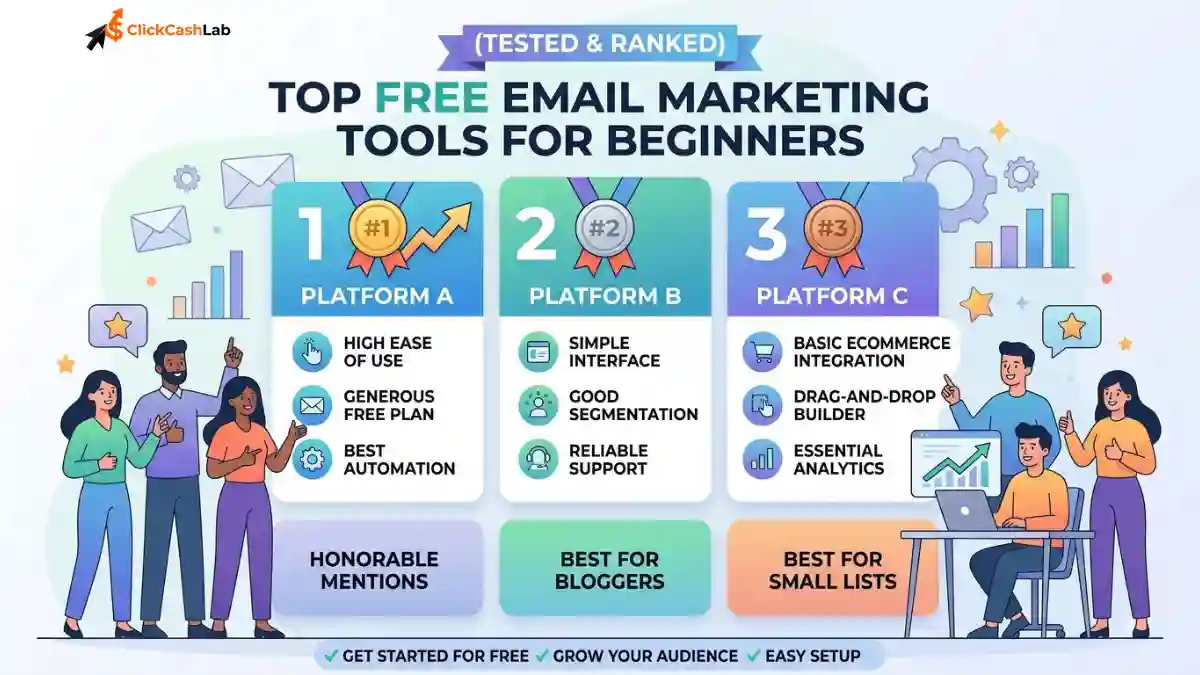
Getting started with email marketing in 2026 feels a lot less intimidating than it used to—but that doesn’t mean it’s completely straightforward. If you’re a beginner, you’ve probably come across dozens of tools all claiming to be the “best,” each packed with features that sound impressive but also a little overwhelming. The real challenge isn’t just picking a tool—it’s choosing one that actually helps you take action instead of slowing you down.
Here’s the reality: email marketing is still one of the most powerful ways to connect with an audience and grow a business. While social media platforms come and go, your email list is something you truly own. You’re not at the mercy of algorithms or sudden policy changes. When someone joins your list, you have a direct line to them—and that kind of access is incredibly valuable, especially when you’re just starting out.
But let’s be honest for a second. Not everyone has the budget to invest in expensive marketing software right away. That’s where the top free email marketing tools come in. They give you a risk-free way to learn the ropes, experiment with campaigns, and start building your audience without spending a single dollar. And surprisingly, many of these free tools are powerful enough to run real, results-driven campaigns.
Still, not all free tools are created equal. Some are incredibly beginner-friendly, while others can feel like you’ve been dropped into the deep end without a life jacket. Some offer generous limits and useful features, while others restrict you so much that you can barely get started. That’s why choosing the right tool early on can save you time, frustration, and even missed opportunities.
In this guide, you’re going to discover the Top free email marketing tools for beginners in 2026, all tested and ranked based on real usability, features, and performance. Whether you’re starting a blog, launching a small business, or building a personal brand, this breakdown will help you find a tool that fits your needs—and actually helps you move forward.
Because at the end of the day, it’s not about having the most advanced tool. It’s about having the right tool that helps you take that first step—and keep going.
Why Email Marketing Still Matters in 2026
Email marketing has refused to die—and honestly, it’s not even close. While social media platforms keep changing algorithms and ad costs continue to rise, email remains one of the few marketing channels you actually own. That’s a big deal, especially if you’re just starting out and don’t want your audience at the mercy of a platform’s next update. Think about it: your email list is like a direct line to your audience’s inbox, no middleman required.
Recent data shows that email marketing still delivers an average ROI of $36 for every $1 spent, according to multiple industry reports. That’s not just impressive—it’s almost unfair compared to other channels. And for beginners? It’s even better because many tools offer free plans that are powerful enough to run real campaigns without spending a dime.
Another reason email marketing thrives is its flexibility. You can use it to build relationships, promote products, educate your audience, or even automate entire customer journeys. It’s like having a digital assistant working 24/7, sending the right message at the right time. And the best part? You don’t need to be a tech wizard to get started anymore.
What’s changed in 2026 is how beginner-friendly these tools have become. Drag-and-drop builders, AI-powered subject line suggestions, and pre-built automation workflows have lowered the barrier to entry significantly. You’re no longer staring at a blank screen wondering what to do next. Instead, you’re guided step by step, almost like having a mentor inside the software.
So if you’ve been on the fence about starting email marketing, this is your sign. The tools are better, the learning curve is shorter, and the potential payoff is massive.
The ROI of Email Marketing Compared to Other Channels
When you stack email marketing against other channels like social media or paid ads, the difference becomes obvious pretty quickly. Social platforms are crowded, noisy, and increasingly “pay-to-play.” You might spend hours creating content only for it to reach a fraction of your audience unless you boost it with ads. Email doesn’t work like that.
With email, if someone subscribes, they’ve already shown interest. That means your messages land in front of people who actually want to hear from you. It’s like speaking to a room full of people who chose to be there instead of shouting into a crowded street. That alone boosts engagement rates significantly.
Let’s break it down a bit:
| Channel | Average ROI | Ownership | Reach Control |
|---|---|---|---|
| Email Marketing | $36 per $1 | Full | High |
| Social Media | $2–$6 per $1 | None | Low |
| Paid Ads | Varies widely | None | Medium |
What makes email particularly powerful is its compounding effect. A single subscriber can generate value for months or even years. Compare that to paid ads, where traffic stops the moment you stop spending. Email keeps working in the background, nurturing leads and driving conversions long after the initial effort.
Another overlooked advantage is personalization. Modern tools allow you to segment your audience based on behavior, preferences, or demographics. That means you’re not just sending emails—you’re sending relevant emails. And relevance is what drives clicks, conversions, and ultimately revenue.
For beginners, this is gold. You don’t need a massive budget or a huge audience to see results. Even a small, engaged list can outperform larger, less targeted audiences on other platforms. It’s not about how many people you reach—it’s about how well you connect with them.
How Beginners Can Benefit from Email Automation
Automation might sound intimidating at first, but it’s actually one of the easiest ways to level up your email marketing game. Imagine setting up a system once and having it work for you indefinitely—that’s essentially what email automation does.
For beginners, automation removes a lot of the guesswork. Instead of manually sending emails every time someone subscribes or takes an action, you can create workflows that trigger automatically. For example, when someone joins your list, they can instantly receive a welcome series introducing your brand. No manual effort required.
Here’s where it gets really interesting: automation isn’t just about convenience—it’s about timing. Sending the right message at the right moment can dramatically increase engagement. If someone downloads a free guide, you can follow up with related content or offers while they’re still interested. That’s the kind of precision that’s hard to achieve manually.
Most free tools in 2026 now include basic automation features, which is a huge win for beginners. You can set up:
- Welcome sequences
- Abandoned cart emails
- Re-engagement campaigns
- Birthday or milestone emails
And you don’t need to be a developer to do it. Many platforms offer visual workflow builders where you simply drag and connect steps, almost like building a flowchart.
Another advantage is consistency. When you rely on manual sending, it’s easy to forget or delay campaigns. Automation ensures your audience hears from you regularly, which helps build trust over time. And trust, as you probably know, is what ultimately drives conversions.
Think of automation as your silent business partner. It doesn’t sleep, doesn’t forget, and doesn’t get overwhelmed. It just keeps delivering value to your audience, one email at a time.
What to Look for in Free Email Marketing Tools
Choosing the right email marketing tool as a beginner can feel a bit like walking into a massive supermarket without a shopping list. Everything looks good, everything promises results, but not everything is actually useful for where you are right now. The truth is, most free email marketing tools in 2026 are powerful—but they’re not all beginner-friendly. That’s where knowing what to look for makes all the difference.
At the core, you want a tool that simplifies things, not complicates them. A clean interface, intuitive navigation, and easy onboarding should be non-negotiable. If you spend more time figuring out the platform than actually creating emails, that’s a red flag. The best tools guide you step-by-step, almost like a built-in coach helping you launch your first campaign.
Another major factor is scalability. Even though you’re starting with a free plan, you don’t want to switch platforms every few months. Look for tools that allow you to grow—whether that’s increasing subscriber limits, unlocking advanced automation, or integrating with other platforms later on. Switching tools later can be messy, especially when you’ve already built lists and workflows.
Deliverability is another silent but critical feature. You could write the most compelling email in the world, but if it lands in spam, it’s game over. The top tools invest heavily in maintaining high deliverability rates, which means your emails actually reach inboxes. It’s not flashy, but it’s essential.
Also, consider the ecosystem. Does the tool integrate with your website, CRM, or eCommerce platform? Even beginners benefit from simple integrations, like connecting a signup form to your website or syncing contacts automatically.
Ultimately, the best free email marketing tool isn’t the one with the most features—it’s the one you’ll actually use consistently. Simplicity, reliability, and room to grow should always win over complexity.
Key Features Every Beginner Needs
When you strip away all the bells and whistles, there are a handful of features that truly matter for beginners. These are the building blocks of effective email marketing, and without them, even the most advanced tool won’t help much.
First up is a drag-and-drop email builder. This is your creative playground. Instead of dealing with code or complicated layouts, you can simply click, drag, and customize elements like text, images, and buttons. It makes designing professional-looking emails feel almost effortless. If a tool doesn’t offer this, it’s probably not beginner-friendly.
Next is list management and segmentation. At first, you might only have a handful of subscribers, but as your list grows, you’ll want to organize it. Segmentation allows you to send targeted emails based on user behavior or preferences. For example, you can send different emails to new subscribers versus long-time readers. That level of personalization can significantly boost engagement.
Automation is another must-have, even on a basic level. You don’t need complex workflows right away, but having the ability to set up a simple welcome sequence can make a huge difference. It ensures every new subscriber gets a consistent introduction to your brand without you lifting a finger each time.
Analytics and reporting are equally important. You need to know what’s working and what’s not. Metrics like open rates, click-through rates, and unsubscribe rates give you insights into how your audience is responding. Without this data, you’re essentially guessing—and guessing rarely leads to consistent results.
Finally, look for pre-built templates. These are especially helpful when you’re just starting out and don’t know what a good email design looks like. Templates give you a solid starting point, saving time and reducing the learning curve.
Think of these features as your starter toolkit. You don’t need everything right away, but these essentials will set you up for success from day one.
Limitations of Free Plans You Should Know
Free plans are fantastic, but they’re not without their trade-offs. Understanding these limitations upfront can save you a lot of frustration later. It’s not about avoiding free tools—it’s about using them strategically.
One of the most common limitations is the subscriber cap. Many platforms allow a certain number of subscribers for free—often ranging from 500 to 2,500. Once you exceed that limit, you’ll need to upgrade to a paid plan. For beginners, this isn’t usually a problem right away, but it’s something to keep in mind as you grow.
Another limitation is email sending limits. Some tools cap how many emails you can send per month or per day. This can affect your ability to run frequent campaigns or reach your entire list at once. It’s not a deal-breaker, but it does require some planning.
Branding is another factor. Many free plans include the platform’s logo in your emails. While it’s a small detail, it can make your emails look less professional. Removing branding is usually part of paid plans.
Automation features can also be restricted. While basic automation is often included, advanced workflows—like multi-step customer journeys or behavior-based triggers—might be locked behind a paywall. This can limit how sophisticated your campaigns can become over time.
Support is another area where free plans may fall short. You might not get priority support or access to live chat, which can be frustrating if you run into issues. However, many platforms compensate with extensive knowledge bases and tutorials.
The key is to see free plans as a starting point, not a permanent solution. They’re perfect for learning, experimenting, and building your foundation. But as your needs grow, you’ll likely need to invest in more advanced features.
How We Tested and Ranked These Tools
Before jumping into the rankings, it’s worth understanding how these tools were evaluated. Not all “best tool” lists are created equal—some are based purely on features, while others prioritize ease of use or pricing. For this guide, the focus was on what actually matters to beginners in real-world scenarios.
The goal wasn’t to find the most powerful tool overall—it was to find the most useful tools for someone just getting started. That distinction matters because beginners have very different needs compared to experienced marketers. Simplicity, clarity, and support often matter more than advanced capabilities.
Each tool was tested hands-on, from setting up an account to sending actual campaigns. This wasn’t about reading feature lists—it was about experiencing what a beginner would go through. How-easy is it to create your first email? How intuitive is the interface? How-quickly can you set up automation?
Performance was also considered. Deliverability rates, email load times, and reliability all play a role in how effective a tool is. After all, a tool that looks great but fails to deliver emails consistently isn’t very useful.
Pricing transparency was another factor. Some tools advertise “free plans” but hide key limitations or push aggressive upsells. The rankings favor platforms that are upfront about what you get and what you don’t.
In short, this ranking is built around practicality. It’s not about flashy features—it’s about what actually works for beginners trying to get results.
Criteria for Evaluation
To keep things fair and consistent, each tool was evaluated based on a set of core criteria. These criteria reflect what beginners typically need and value most.
Ease of use was at the top of the list. A tool can have amazing features, but if it’s confusing or overwhelming, it’s not beginner-friendly. The best tools make it easy to get started without requiring hours of tutorials.
Feature availability was another key factor. Even on a free plan, you should have access to essential features like email creation, list management, and basic automation. Tools that lock too many features behind paywalls scored lower.
Deliverability was also crucial. High deliverability ensures your emails reach inboxes instead of spam folders. While this can be hard to measure precisely, user feedback and testing provided useful insights.
Customer support and resources were considered as well. Beginners often need guidance, so tools with helpful documentation, tutorials, and responsive support scored higher.
Finally, scalability played a role. Tools that allow you to grow without forcing an immediate upgrade were favored. The idea is to choose a platform that can grow with you, not one you’ll outgrow quickly.
Real-World Testing Approach
Testing wasn’t done in a vacuum—it was designed to mimic real-world use as closely as possible. Each tool was used to create and send actual campaigns, build subscriber lists, and set up automation workflows.
The onboarding process was closely observed. Was it smooth and intuitive, or confusing and overwhelming? First impressions matter, especially for beginners who might be trying email marketing for the first time.
Email creation was another focus area. The drag-and-drop editors were tested for flexibility, ease of use, and design quality. Templates were evaluated based on how modern and customizable they felt.
Automation workflows were also tested, even on free plans. The goal was to see how easy it is to set up something like a welcome series or follow-up emails.
Analytics dashboards were explored to assess how clearly data is presented. Beginners need insights, but they also need those insights to be easy to understand.
This hands-on approach ensures that the rankings reflect actual user experience, not just theoretical capabilities.
Top Free Email Marketing Tools for Beginners (Ranked)
Finding the right email marketing tool can feel overwhelming, especially when every platform claims to be “the best.” But when you narrow it down to what actually works for beginners—ease of use, generous free plans, and reliable performance—a few names consistently rise to the top. These tools were tested in real scenarios, not just skimmed for features, and the rankings reflect what it’s actually like to use them when you’re just getting started.
What makes these tools stand out isn’t just what they offer, but how they offer it. The onboarding experience, the clarity of their dashboards, and how quickly you can go from zero to sending your first campaign all play a huge role. Some tools shine because they’re incredibly simple, while others stand out because they offer advanced features without overwhelming you.
Another important factor is how these platforms grow with you. A beginner-friendly tool should not only help you start but also support you as your list expands and your campaigns become more sophisticated. That’s why scalability and upgrade paths were considered in the rankings as well.
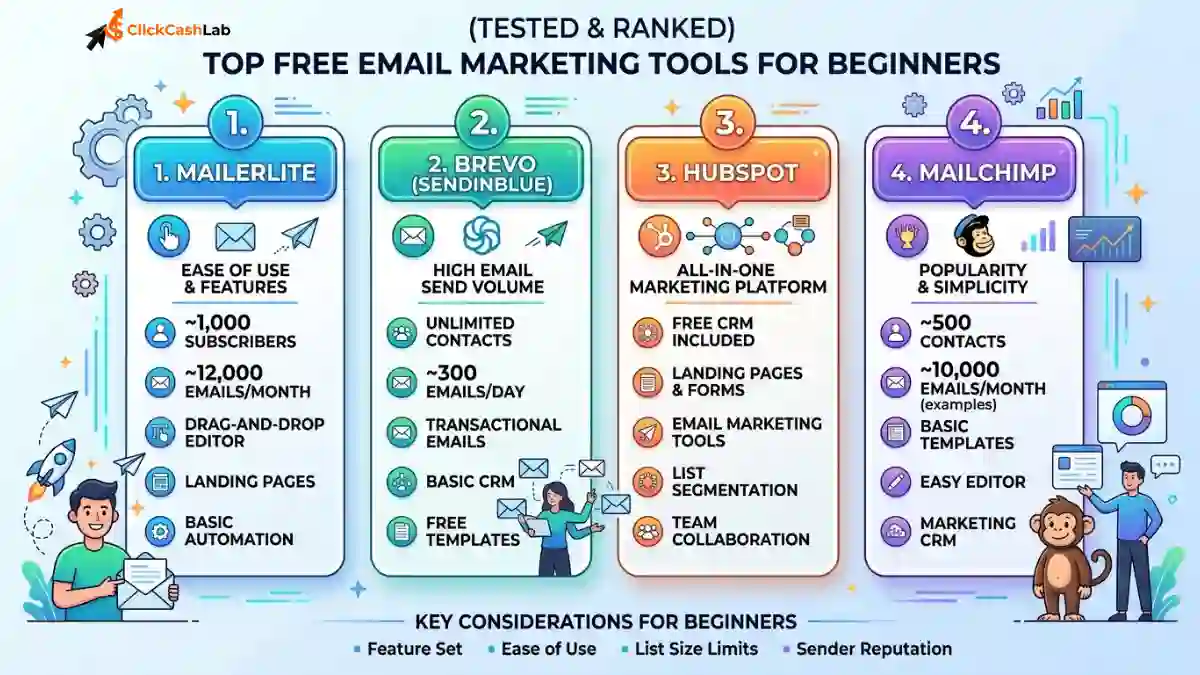
Below are the top free email marketing tools for beginners in 2026, each with its own strengths and ideal use cases. Whether you prioritize automation, simplicity, or deliverability, there’s something here for you.
1. Mailchimp – Best All-Around Tool
Mailchimp has been around for years, and there’s a reason it continues to dominate the email marketing space. It strikes a balance between simplicity and functionality that’s hard to beat, especially for beginners. When you first sign up, the platform walks you through the setup process in a way that feels almost effortless. You’re not left guessing what to do next—it’s all laid out clearly.
The free plan is generous enough to get started, offering basic automation, a drag-and-drop editor, and access to a wide range of templates. The interface is polished and intuitive, making it easy to create professional-looking emails even if you’ve never done it before. It’s like having training wheels that don’t feel restrictive.
One of Mailchimp’s biggest strengths is its ecosystem. It integrates with a wide variety of tools, from website builders to eCommerce platforms. This makes it a great choice if you plan to expand your marketing efforts later on. You won’t need to switch platforms as your needs grow.
That said, it’s not perfect. Some advanced features are locked behind paid plans, and the pricing can become expensive as your list grows. But for beginners, the free plan offers more than enough to get started and see real results.
If you’re looking for a reliable, well-rounded tool that covers all the basics and then some, Mailchimp is hard to beat.
2. Brevo (Sendinblue) – Best for Automation
Brevo, formerly known as Sendinblue, is a powerhouse when it comes to automation—especially considering what it offers for free. If you’re someone who wants to set up workflows early on, this tool gives you more flexibility than most competitors.
What makes Brevo stand out is its approach to email limits. Instead of capping the number of subscribers, it limits the number of emails you can send per day. This can be a huge advantage if you’re focused on building a large list without immediately worrying about subscriber caps.
The automation builder is one of the best in its class, even on the free plan. You can create workflows based on user behavior, triggers, and conditions, all through a visual interface that’s surprisingly easy to use. It feels advanced without being intimidating.
Brevo also includes features like SMS marketing and transactional emails, which adds another layer of versatility. For beginners who want to explore beyond basic email campaigns, this is a big plus.
The only downside is that the interface can feel slightly less polished compared to Mailchimp. It’s not difficult to use, but it may take a bit longer to get comfortable with.
If automation is your priority, Brevo is easily one of the best free options available.
3. MailerLite – Best for Simplicity
MailerLite lives up to its name by keeping things light, simple, and easy to use. If you’re someone who gets overwhelmed by too many options, this platform is a breath of fresh air. It strips away unnecessary complexity and focuses on what actually matters.
The dashboard is clean and uncluttered, making it easy to navigate even if you’re completely new to email marketing. Creating campaigns, managing subscribers, and setting up automation all feel straightforward and intuitive.
Despite its simplicity, MailerLite doesn’t skimp on features. You still get access to a drag-and-drop editor, automation workflows, and landing page builders. It’s a great example of how less can actually be more.
Another standout feature is its affordability when you eventually upgrade. Compared to competitors, MailerLite offers some of the most budget-friendly paid plans, making it a smart long-term choice.
The trade-off is that it may not have as many advanced features as some other tools. But for beginners, that’s often a good thing—it keeps the focus on learning the basics without getting distracted.
If you value simplicity and ease of use above all else, MailerLite is an excellent choice.
4. Benchmark Email – Best for Small Campaigns
Benchmark Email is one of those tools that quietly does its job well without trying to overwhelm you with features. It’s particularly well-suited for beginners who are running small-scale campaigns and want something reliable and easy to use.
The platform offers a straightforward email builder with a variety of templates, making it easy to create visually appealing campaigns. The interface is user-friendly, and the learning curve is relatively short. You won’t need to spend hours figuring things out.
One area where Benchmark shines is customer support. Even on the free plan, users often report responsive and helpful assistance, which can be a lifesaver when you’re just starting out.
The free plan does come with limitations, particularly in terms of automation and advanced features. But for simple campaigns—like newsletters or announcements—it gets the job done effectively.
If you’re not looking for anything too complex and just want a dependable tool to send emails, Benchmark Email is a solid option.
5. Sender – Best for High Deliverability
Sender might not be as well-known as some of the other tools on this list, but it punches well above its weight—especially when it comes to deliverability. After all, what good is an email if it never reaches the inbox?
The platform offers a surprisingly generous free plan, including a high subscriber limit and a decent number of monthly emails. This makes it a great choice for beginners who want to scale quickly without hitting limits too soon.
Sender’s interface is simple and functional, focusing on efficiency rather than flashy design. It may not look as polished as Mailchimp, but it gets the job done without unnecessary distractions.
Automation features are available, though not as advanced as Brevo’s. Still, they’re more than sufficient for basic workflows like welcome emails and follow-ups.
What really sets Sender apart is its focus on performance. High deliverability rates mean your emails are more likely to reach your audience, which can have a direct impact on your results.
If your main goal is to ensure your emails actually get seen, Sender is a strong contender.
Comparison Table of Top Tools
| Tool | Free Plan Limit | Best Feature | Ease of Use | Automation | Deliverability |
|---|---|---|---|---|---|
| Mailchimp | 500 contacts | All-in-one platform | ⭐⭐⭐⭐⭐ | ⭐⭐⭐⭐ | ⭐⭐⭐⭐ |
| Brevo | Unlimited contacts | Advanced automation | ⭐⭐⭐⭐ | ⭐⭐⭐⭐⭐ | ⭐⭐⭐⭐ |
| MailerLite | 1,000 contacts | Simplicity | ⭐⭐⭐⭐⭐ | ⭐⭐⭐⭐ | ⭐⭐⭐⭐ |
| Benchmark | 500 contacts | Ease for small campaigns | ⭐⭐⭐⭐ | ⭐⭐⭐ | ⭐⭐⭐⭐ |
| Sender | 2,500 contacts | High deliverability | ⭐⭐⭐⭐ | ⭐⭐⭐ | ⭐⭐⭐⭐⭐ |
Pros and Cons of Free Email Marketing Tools
Free email marketing tools are a fantastic entry point, but they come with their own set of advantages and trade-offs. Understanding both sides helps you make smarter decisions and avoid surprises down the road.
On the positive side, the most obvious benefit is cost—there’s no financial barrier to getting started. This makes it accessible to anyone, whether you’re a solo entrepreneur, a blogger, or a small business owner. You can experiment, learn, and refine your strategy without risking money.
Another advantage is the learning opportunity. Free tools allow you to explore features, test campaigns, and understand how email marketing works before committing to a paid plan. It’s like a sandbox where you can build your skills.
However, the limitations can’t be ignored. Subscriber caps, sending limits, and restricted features can become bottlenecks as you grow. Branding in emails can also affect your professionalism, especially if you’re building a brand.
There’s also the issue of scalability. While free plans are great for starting out, they’re not always sustainable long-term. At some point, you’ll likely need to upgrade to unlock more advanced features and remove limitations.
The key is to use free tools strategically—maximize their benefits while being aware of their constraints.
Tips to Succeed with Free Email Marketing Tools
Getting access to a free email marketing tool is one thing—actually using it effectively is a completely different game. Many beginners sign up, send a few emails, and then quietly give up when results don’t come instantly. The truth is, success with email marketing isn’t about the tool itself—it’s about how you use it.
First, consistency beats perfection every single time. You don’t need beautifully designed emails or complex automation workflows right away. What you need is a consistent schedule that your audience can rely on. Whether it’s once a week or twice a month, showing up regularly builds familiarity and trust. Think of it like a conversation—if you disappear for months, people forget you exist.
Another key factor is understanding your audience. It’s tempting to write emails that sound impressive, but what actually works is writing emails that feel relatable. Use simple language, ask questions, and speak directly to your reader’s needs. Imagine you’re writing to one person, not a crowd—that shift alone can dramatically improve engagement.
Experimentation is also crucial. Free tools often come with analytics, so use them. Test different subject lines, email formats, and sending times. Over time, you’ll start noticing patterns—what your audience responds to and what they ignore. That’s where real growth happens.
Finally, don’t underestimate the power of storytelling. People don’t connect with features—they connect with experiences. Sharing small stories, lessons, or even mistakes can make your emails feel more human and less like marketing.
Success doesn’t come from doing everything perfectly. It comes from doing the basics consistently and improving over time.
Building Your First Email List
Building an email list from scratch can feel like trying to fill a bucket with a dropper. At first, growth is slow, and it might seem like your efforts aren’t paying off. But here’s the thing—every successful email marketer started exactly where you are now.
The foundation of list building is offering something valuable in exchange for someone’s email address. This is often called a lead magnet. It could be a free guide, a checklist, a template, or even a short email course. The key is to solve a specific problem for your audience. Generic offers rarely work—specificity is what drives sign-ups.
Placement also matters more than most beginners realize. Your signup forms should be visible and easy to access. This could mean adding them to your website homepage, blog posts, or even your social media profiles. If people have to search for a way to subscribe, most won’t bother.
Another effective strategy is leveraging content. Whether it’s blog posts, videos, or social media content, each piece should gently guide people toward your email list. You’re not forcing them—you’re inviting them to go deeper.
It’s also important to set expectations. Let subscribers know what they’ll receive and how often. This builds trust right from the start and reduces the chances of unsubscribes later.
Growth may feel slow at first, but it compounds over time. A small, engaged list is far more valuable than a large, uninterested one.
Writing Emails That Actually Convert
Writing emails that convert isn’t about being clever—it’s about being clear. Many beginners overthink their emails, trying to sound professional or persuasive, but end up sounding robotic. The best emails feel like a natural conversation, not a sales pitch.
Start with your subject line. This is your first impression, and it determines whether your email gets opened or ignored. Keep it simple, curiosity-driven, and relevant. You don’t need clickbait—you need clarity with a hint of intrigue.
Once the email is opened, the first few lines matter the most. This is where you hook the reader. If your opening feels generic or boring, people will lose interest بسرعة. Try starting with a question, a bold statement, or a short story.
The body of your email should focus on one main idea. Beginners often make the mistake of cramming too much into a single email. Instead, keep it focused and guide the reader toward a specific action—whether it’s clicking a link, reading a post, or making a purchase.
Call-to-actions (CTAs) should be clear and direct. Don’t make readers guess what to do next. Use simple language like “Read more,” “Download now,” or “Get started.”
And here’s something many overlook—tone matters. Write like a human. Use contractions, ask questions, and don’t be afraid to show personality. People connect with people, not perfect marketing copy.
When done right, your emails won’t feel like marketing—they’ll feel like messages your audience actually wants to read.
Common Mistakes Beginners Should Avoid
Mistakes in email marketing are almost inevitable, especially when you’re just starting out. But the difference between slow progress and fast growth often comes down to how quickly you recognize and fix those mistakes.
One of the most common issues is inconsistency. Sending emails sporadically—once this week, then disappearing for a month—confuses your audience. It also hurts engagement because people simply forget who you are. Consistency builds familiarity, and familiarity builds trust.
Another mistake is focusing too much on selling. It’s understandable—you want results. But if every email is a sales pitch, people will tune out بسرعة. The key is balance. Provide value, share insights, and build relationships. Sales should feel like a natural next step, not the only goal.
Ignoring analytics is another big one. Many beginners send emails without ever checking how they performed. This is like driving with your eyes closed. Metrics like open rates and click-through rates give you valuable feedback. Use that data to improve.
Poor list management can also hurt your results. Sending the same email to everyone, regardless of their interests or behavior, reduces relevance. Even basic segmentation can make a big difference.
Finally, there’s the temptation to chase perfection. Waiting until everything is “just right” often leads to inaction. The reality is, your early emails won’t be perfect—and that’s okay. What matters is getting started and improving along the way.
Avoiding these common pitfalls won’t make you perfect, but it will put you ahead of most beginners.
Conclusion
Email marketing in 2026 is more accessible than ever, especially for beginners. With a wide range of free tools available, you don’t need a big budget to start building meaningful connections with your audience. What you do need is the willingness to learn, experiment, and stay consistent.
The tools covered in this guide—Mailchimp, Brevo, MailerLite, Benchmark Email, and Sender—each offer unique strengths. Whether you prioritize simplicity, automation, or deliverability, there’s a platform that fits your needs. The key is to choose one and start using it, rather than getting stuck comparing options endlessly.
At the end of the day, the tool is just the vehicle. Your strategy, your messaging, and your consistency are what drive results. A simple email sent regularly will outperform a perfect email that never gets sent.
If you’re just starting out, focus on the basics. Build your list, write authentic emails, and learn from your data. Over time, those small efforts compound into something powerful.
Email marketing isn’t just about sending messages—it’s about building relationships. And when done right, those relationships can become one of your most valuable assets.
FAQs
1. Which free email marketing tool is best for absolute beginners?
MailerLite is often the easiest for beginners due to its clean interface and simplicity, while Mailchimp offers a more feature-rich experience.
2. Are free email marketing tools really enough to start?
Yes, free plans are more than enough to build a list, send campaigns, and even set up basic automation.
3. How many emails should I send per week?
For beginners, 1–2 emails per week is a good starting point to stay consistent without overwhelming your audience.
4. Can I make money using free email marketing tools?
Absolutely. Many beginners generate income through affiliate marketing, product sales, or services using free tools.
5. When should I upgrade to a paid plan?
You should consider upgrading when you hit subscriber limits, need advanced automation, or want to remove branding.
How-to-Build an Email-List In 2026 From Scratch Without Paid Ads
Fix Them Fast: 10 Email Marketing Mistakes Kill Your Conversions
